Alphabets to Word Generator: 7 Powerful Ways to Make Words
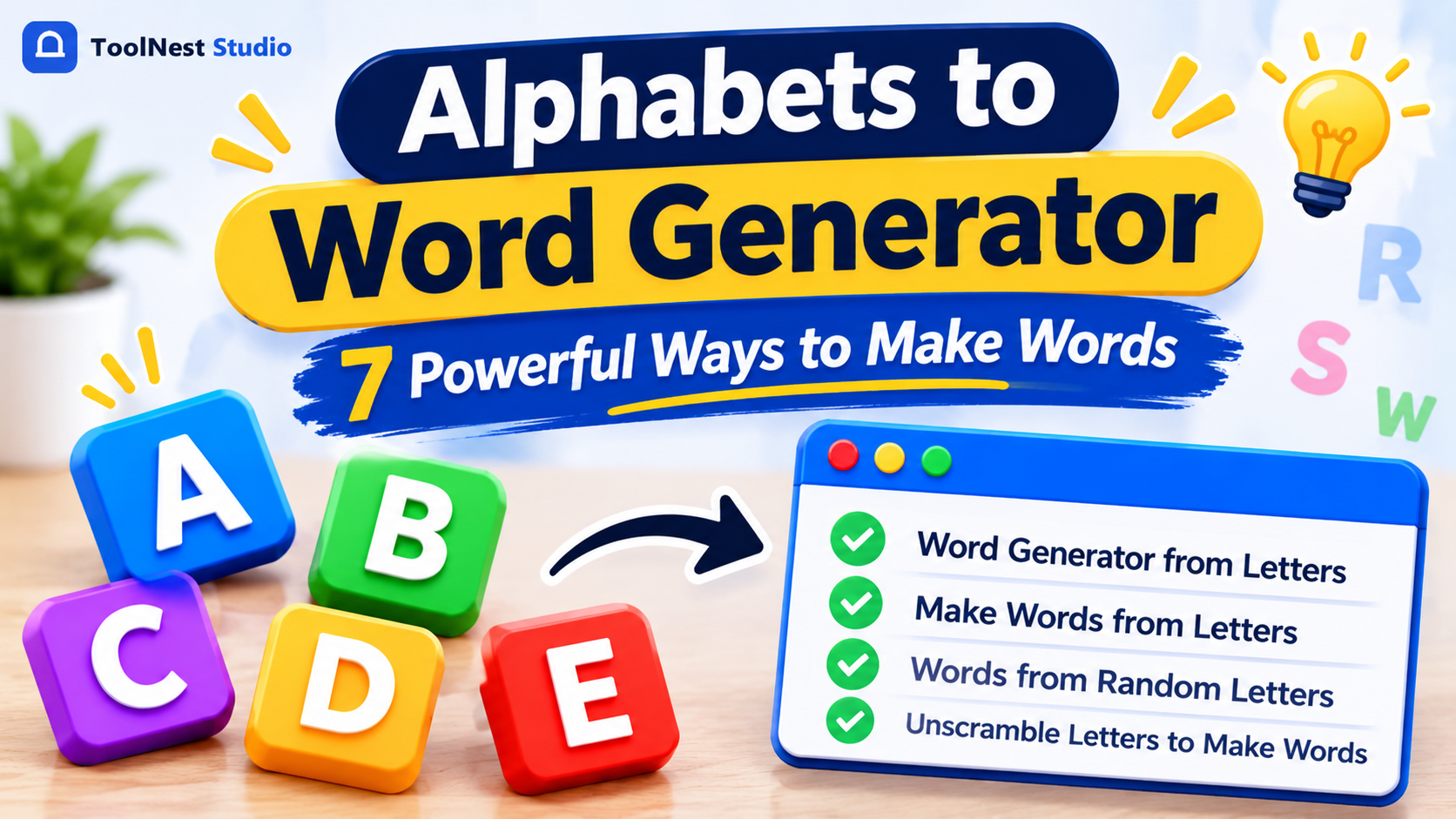
Alphabets to Word Generator is a useful way to explore different words using individual letters or random letter combinations. Whether you are learning English, solving word puzzles, improving your vocabulary, or looking for creative writing ideas, understanding how letters form meaningful words can make the process easier.
Sometimes, you have several letters but cannot figure out which words they can create. Other times, you may want to discover new words for a school activity, writing project, or word game. A word generator can help you explore these possibilities without spending too much time thinking of every combination yourself.
In this guide, you will learn how word generation works, how to make words from letters, useful examples, and practical ways to improve your vocabulary.
What Is an Alphabets to Word Generator?
An Alphabets to Word Generator is a word-generation concept that helps users discover meaningful words from individual letters or groups of letters. Depending on the type of generator, it may rearrange supplied letters, suggest words related to a topic, or create possible combinations.
For example, if you enter the letters A, T, E, and R, you may discover words such as:
- RATE
- TEAR
- TARE
- EAT
- EAR
- ART
These examples show how the same letters can create different words when arranged in different orders.
A letter-based word generator is particularly helpful when you have a collection of letters but are unsure how to use them. Instead of checking each combination manually, you can explore possible words more conveniently.
How Does an Alphabets to Word Generator Work?
A word generator uses different methods to turn letters into meaningful words. The exact process depends on the tool and the type of word generation it supports.
Most letter-based generators follow a simple process:
- Accepts input letters: You enter individual alphabets or a group of random letters.
- Creates combinations: The generator examines possible arrangements of the supplied letters.
- Checks possible words: Dictionary-based generators compare combinations against a word list.
- Displays results: Matching words appear in a list, sometimes organized by length or other filters.
For example, entering the letters S, T, O, P may produce words such as STOP, POST, POTS, and SPOT.
Some AI-based generators work differently. They can suggest related words based on a topic or instruction instead of strictly rearranging the letters you provide.
Understanding this difference helps you choose the right type of word generator for your task.
7 Powerful Ways to Make Words from Letters
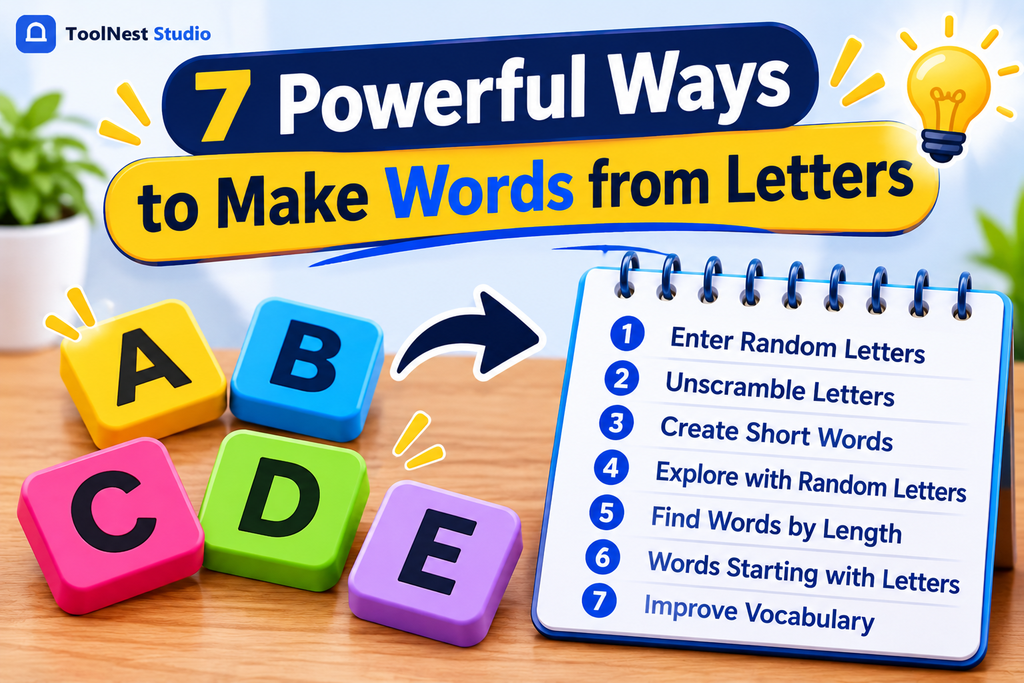
There are several ways to explore words using alphabets. Here are seven practical approaches that can help you discover new combinations and improve your word-building skills.
1. Enter Random Letters to Discover New Words
One simple way to discover vocabulary is to start with random letters. You do not need to know the final word before beginning.
For example, consider the letters:
C, A, R, E, S
You can create different words, including:
- CARE
- RACE
- CASE
- SCAR
- ACRES
- SCARE
This approach is useful for word puzzles, classroom activities, and vocabulary practice.
A Word Generator from Letters can make this process easier by showing possible combinations without requiring you to test every arrangement manually.
2. Unscramble Letters to Make Words
Unscrambling means rearranging mixed-up letters to discover meaningful words.
For example:
Input: L, I, S, T, E, N
Possible words include:
- LISTEN
- SILENT
- ENLIST
- INLETS
The same letters can produce different words depending on their arrangement.
This method is especially helpful for anagram puzzles, spelling exercises, and word games.
“If you enjoy solving puzzles, you can organize your discovered words alphabetically using our Sort Lines Alphabetically tool.“
3. Create Short Words from Long Letter Combinations
You do not always need to use every available letter to create a word.
For example, the letters B, R, I, G, H, T can form:
- BIG
- BIT
- HIT
- RIB
- RIGHT
- BRIGHT
Finding shorter words is useful when you are working with limited spaces in a puzzle or trying to learn basic vocabulary.
It also gives beginners an easier way to recognize smaller words within longer letter combinations.
4. Explore Words with Random Letters
Random letter combinations can be a fun way to discover unfamiliar words.
For example, take the letters:
P, L, A, N, E, T
Some possible words are:
- PLAN
- LATE
- PANE
- PLANE
- PLANT
- PLANET
A generator can help you explore different possibilities and identify combinations you might not notice immediately.
This approach is also useful for creative writing exercises, vocabulary challenges, and educational activities.
5. Find Words Based on Their Length
Sometimes, you know how many letters a word should contain but cannot find the correct combination.
In this situation, filtering words by length can make the process easier.
For example, using the letters S, T, A, R, E:
| Word length | Example words |
|---|---|
| 2 letters | AS, AT |
| 3 letters | ART, RAT, SAT |
| 4 letters | STAR, RATE, TEAR |
| 5 letters | STARE, TEARS |
Word length filters are particularly helpful for crossword puzzles and other word games where the available spaces determine the answer.
6. Discover Words Starting with Specific Letters
Another useful approach is to search for words that begin with a particular letter.
For example, if you have the letters C, A, T, E, and R and want words beginning with C, possible results include:
- CAT
- CAR
- CARE
- CART
- CRATE
This technique helps narrow down a large list of possible combinations.
It can also help students practice spelling patterns and understand how different letters work together.
7. Use Word Generation to Improve Vocabulary
Word generators are not only useful for puzzles. They can also support everyday vocabulary learning.
When you discover an unfamiliar word, take a moment to check its meaning, spelling, and usage.
For example, if you discover the word “CRATE,” you can learn what it means and create a sentence using it.
You can make this activity more effective by:
- Writing down unfamiliar words.
- Checking their meanings in a dictionary.
- Learning their correct pronunciation.
- Using new words in sentences.
- Reviewing previously discovered vocabulary.
This turns a simple word-generation activity into a useful learning exercise.
Word Generator from Letters: Practical Examples
Looking at examples makes it easier to understand how letters can form different words.
Here are some combinations you can explore.
| Input letters | Possible words |
|---|---|
| A, C, T | ACT, CAT |
| D, O, G | DOG, GOD |
| E, A, R, T | RATE, TEAR, TARE |
| S, T, O, N, E | STONE, NOTES, TONES |
| C, L, O, U, D | CLOUD, COLD, LOUD |
| P, L, A, N, E | PLANE, PANEL, PENAL |
These examples demonstrate how a small collection of letters can create several meaningful words.
Remember that a word’s validity depends on the dictionary being used. Some word games also follow their own accepted word lists.
Different Uses of an Alphabets to Word Generator
A letter-based word generator can be useful in different situations. Its benefits are not limited to people who enjoy word games.
For Students
Students can use word-generation activities to practice spelling, recognize letter patterns, and expand their English vocabulary.
Teachers can also use letter combinations to create classroom exercises and spelling challenges.
For Word Game Players
People who enjoy anagrams, crossword puzzles, and other word games can use word generators to explore possible answers.
They can also practice recognizing shorter words within longer combinations.
For Writers and Bloggers
Writers sometimes need fresh vocabulary when creating articles, stories, or other written content.
A word generator can provide ideas for exploring alternative words, although the meaning and context should always be checked before using a suggestion.
For English Language Learners
People learning English can use word combinations to become more familiar with spelling patterns and common vocabulary.
Starting with simple three-letter and four-letter words can make learning more manageable.
Common Mistakes to Avoid When Making Words from Letters
Although generating words is relatively simple, a few common mistakes can affect your results.
1. Using Letters That Are Not Available
If you are solving a letter-based puzzle, make sure every word uses only the letters provided.
For example, if your input is C, A, T, you cannot create the word “CART” because the letter R is missing.
2. Repeating Letters Incorrectly
Pay attention to repeated letters.
If your input contains only one A, you cannot use two A’s in a word unless the generator allows additional letters.
3. Ignoring Word Meanings
Not every possible letter combination is a valid English word.
Always check unfamiliar results in a reliable dictionary before using them in writing or educational work.
4. Confusing Word Generation with Word Unscrambling
A word generator may create related words from a topic, while a word unscrambler rearranges letters you already have.
These are different processes, so choose the method that matches your purpose.
5. Forgetting to Check Spelling
A word may look familiar but still be spelled incorrectly.
Review your results before using them in an assignment, article, or word game.
Helpful Tools for Working with Generated Words
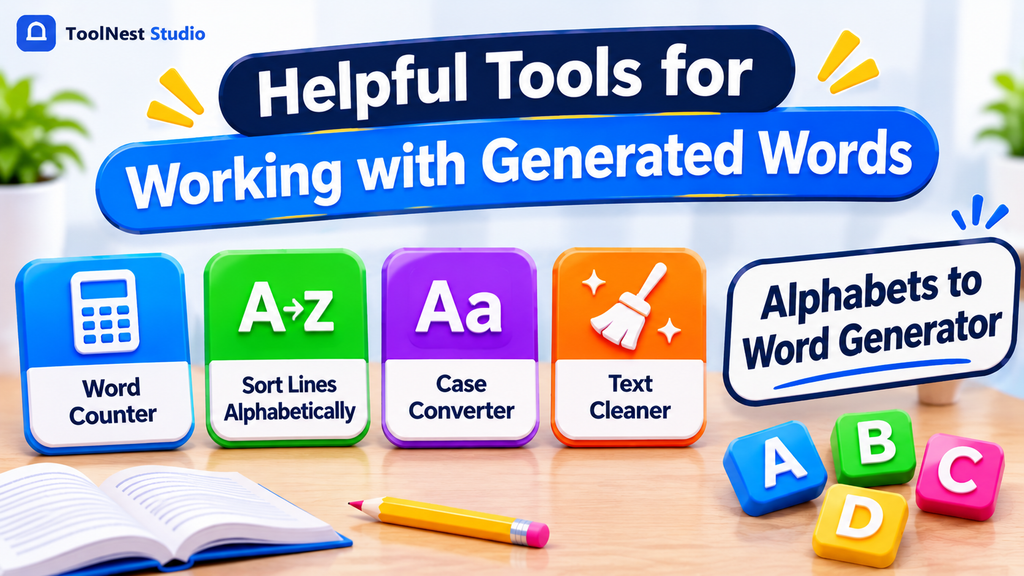
After discovering new words, you may need additional tools to organize, count, or edit them.
Here are some useful ToolNestStudio tools you can connect naturally with this topic:
- Word Counter : Use this tool to count generated words and check the length of your text.
- Sort Lines Alphabetically: Arrange a list of generated words in alphabetical order.
- Case Converter: Change words into uppercase, lowercase, or title case.
- Text Cleaner :Remove unnecessary spaces and unwanted formatting from copied word lists.
These tools serve different purposes, but they can make working with larger word lists more convenient.
For checking the meanings, definitions, and correct spelling of unfamiliar words, you can also consult a trusted online dictionary such as Merriam-Webster.
Tips for Getting Better Results from a Word Generator
If you want to make the most of a word generator, follow these practical tips:
- Enter letters carefully: Check your input before searching.
- Start with simple combinations: Practice using three or four letters before moving to longer groups.
- Try different arrangements: A small change in letter order can reveal another word.
- Check repeated letters: Make sure your words follow the available letter count.
- Explore word lengths: Short and long words can provide different possibilities.
- Learn new meanings: Do not simply collect words; understand how they are used.
- Verify unfamiliar results: Use a trusted dictionary to check spelling and meaning.
These small habits can help you use word-generation methods more effectively.
Frequently Asked Questions
What is an alphabets to word generator?
An alphabets to word generator is a method or online tool that helps users discover meaningful words from individual letters or groups of letters. It can be useful for vocabulary practice, word puzzles, and creative activities.
How can I make words from letters?
You can make words from letters by arranging them in different combinations and checking whether the results form meaningful words. A letter-based word generator can help you explore possible combinations more quickly.
What words can I make with these letters?
The words you can make depend on the letters you enter and how many times each letter is available. For example, A, T, and E can form words such as EAT, TEA, and ATE.
Can I generate words from random letters?
Yes. You can use random letters to explore possible English words. A dictionary-based generator can check combinations against a word list and display matching results.
What is the difference between a word generator and a word unscrambler?
A word generator may create words from letters, topics, or other inputs, depending on its design. A word unscrambler specifically rearranges mixed-up letters to find meaningful words.
Can I use a word generator for school assignments?
Yes. Word generators can support spelling exercises, vocabulary activities, and classroom learning. However, you should always check the meanings and correct spelling of unfamiliar words.
Can a word generator create long words?
Yes, depending on the number of letters available and the generator’s dictionary. Longer letter combinations may produce several possible words, although not every arrangement will be a valid word.
Are all generated words valid English words?
No. Some generators may display uncommon terms, abbreviations, or combinations that are not accepted in standard English. Checking results in a reliable dictionary is a good way to confirm their validity.
Can I use generated words for word games?
Yes. Generated words can help you explore possible answers for puzzles and word games. However, different games may use different dictionaries and rules, so check whether a suggested word is accepted.
Is a word generator useful for improving vocabulary?
Yes. It can introduce you to unfamiliar words and encourage you to explore their spelling and meanings. Learning how to use those words in sentences makes the activity more valuable.
Final Thoughts
An Alphabets to Word Generator can make exploring letters and discovering new words much easier. Whether you are working on a school activity, solving a puzzle, or improving your vocabulary, understanding how different letters combine can help you find useful word possibilities.
The best approach is to treat word generation as both a practical activity and a learning opportunity. Explore different combinations, check unfamiliar words, and practice using newly discovered vocabulary in everyday writing.